Elemental Blessings · Book I · 2010
Troubled Waters
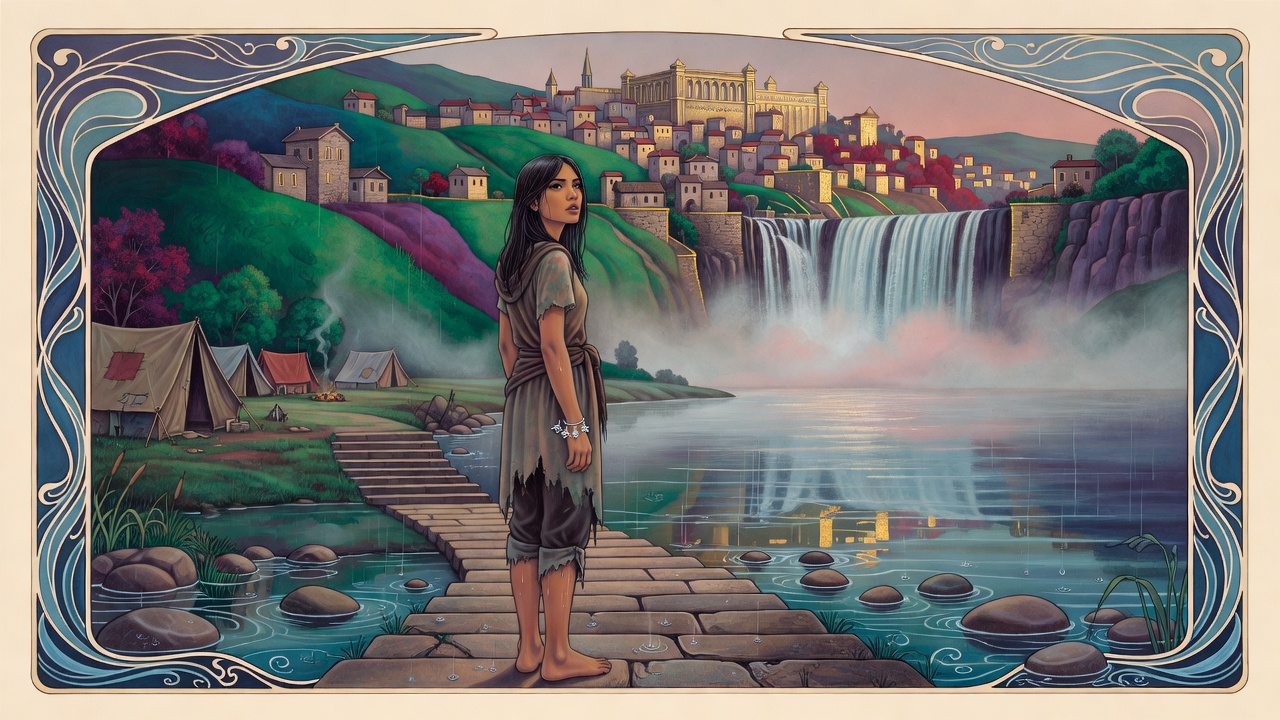
A grieving coru woman, summoned from exile to be the king’s fifth wife, steps out of the carriage and into the river city.
Troubled Waters (Ace, 2010) is where Welce begins: a country of five elements, five great families and an old king with four wives, seen entirely through the eyes of Zoe Ardelay, a coru woman of twenty-three who has spent ten years in a provincial village because her father fell from favour at court. When the king’s adviser arrives to collect her as the fifth wife, she does the most coru thing available. She steps out of the carriage and lets the river city take her in.
It was billed as a stand-alone, and it reads like one: a slow, watery first third of grief and drift, a long interlude on the riverbank, then palace intrigue, family secrets and a climax in which a river comes indoors. It was a finalist for the 2011 Mythopoeic Fantasy Award and became the first of five Elemental Blessings novels, and the bickering courtship of Zoe and the hunti adviser Darien Serlast is the ground the later books stand on. The story stays in close third person on Zoe throughout.
This page summarises the whole book, ending included.
The Pyre and the Summons
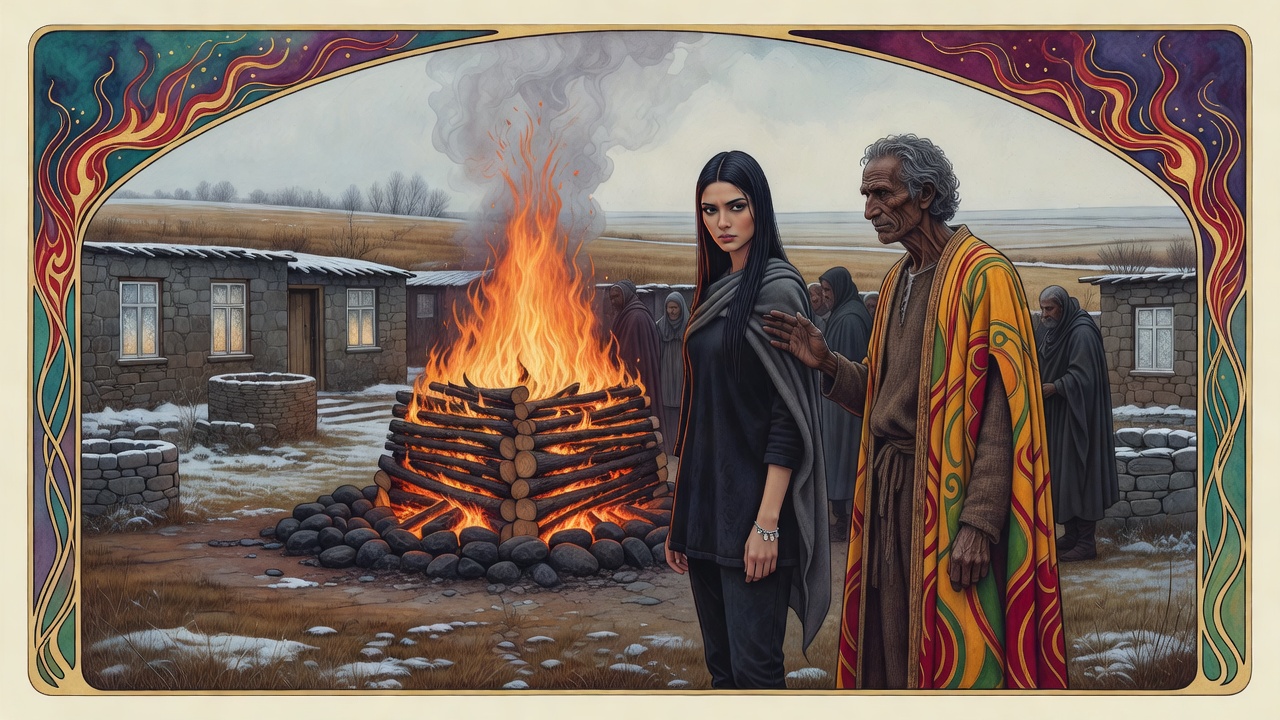
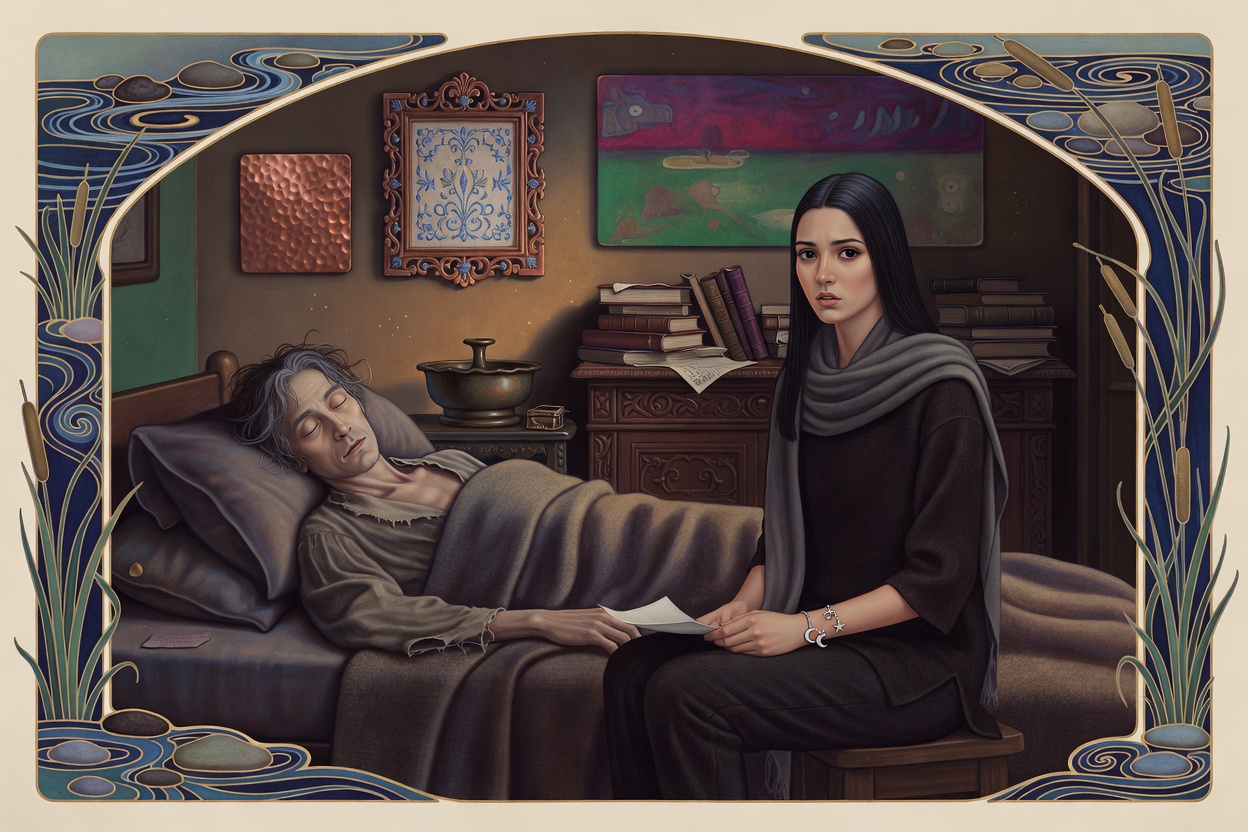
The book opens on a funeral. In weak winter sunlight Navarr Ardelay’s body burns on a pyre, fire for a sweela man, and his daughter Zoe stands numb in the circle of mourners in the small village where the two of them have lived since she was thirteen. “How could there be a world in which Navarr Ardelay did not exist?” He wasted away for a quintile; Doman, the village’s unofficial leader, a hunti man who will not change and will not break, sent to Chialto for medicines that eased the pain and kept Navarr’s mind clear. In his last lucid days Navarr, once an adviser close to King Vernon, told Zoe she must leave the village and remember her mother’s family, the Lalindar clan he blamed for his fall ten years ago. She has no idea whether her grandmother, Christara Lalindar, is still alive.
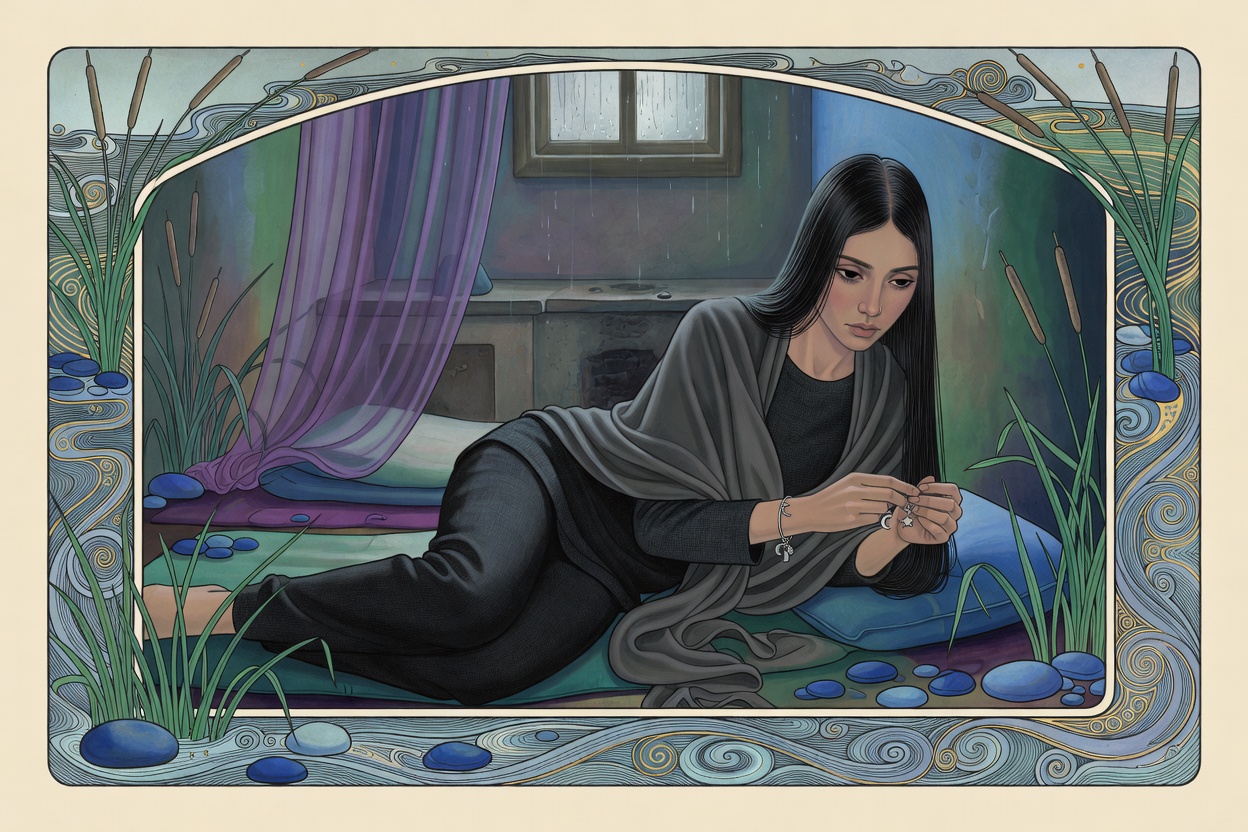
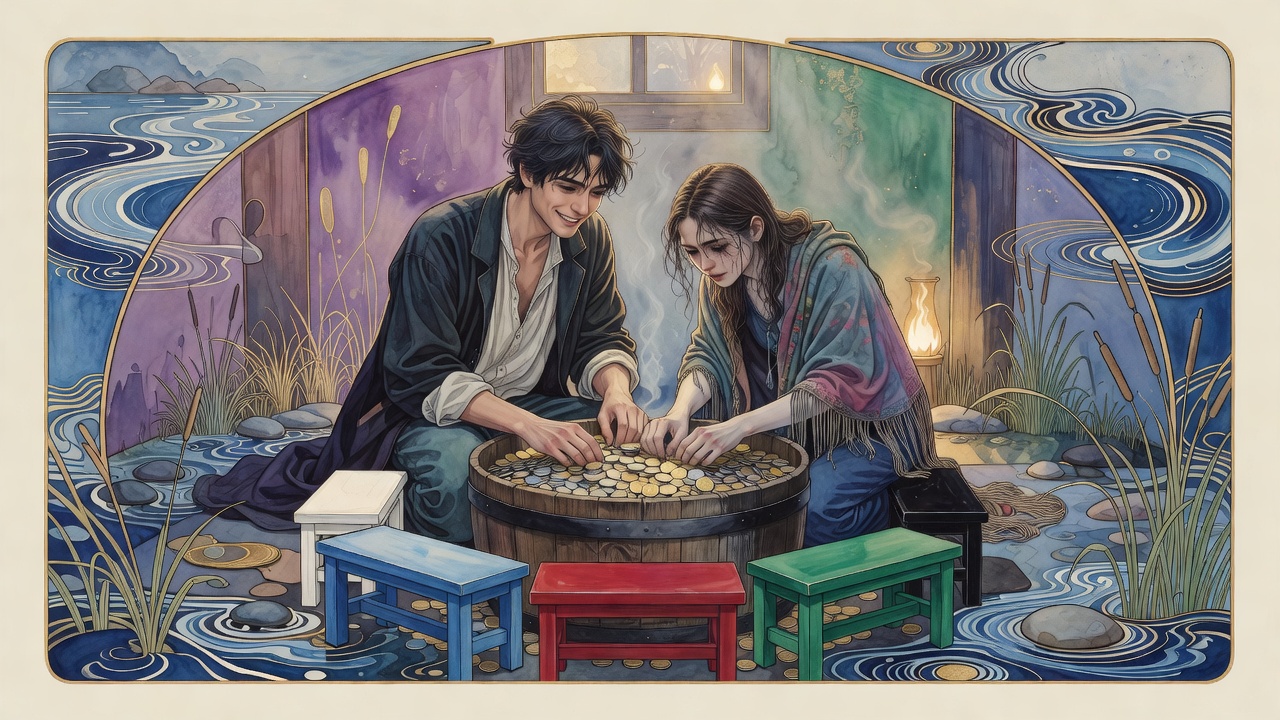
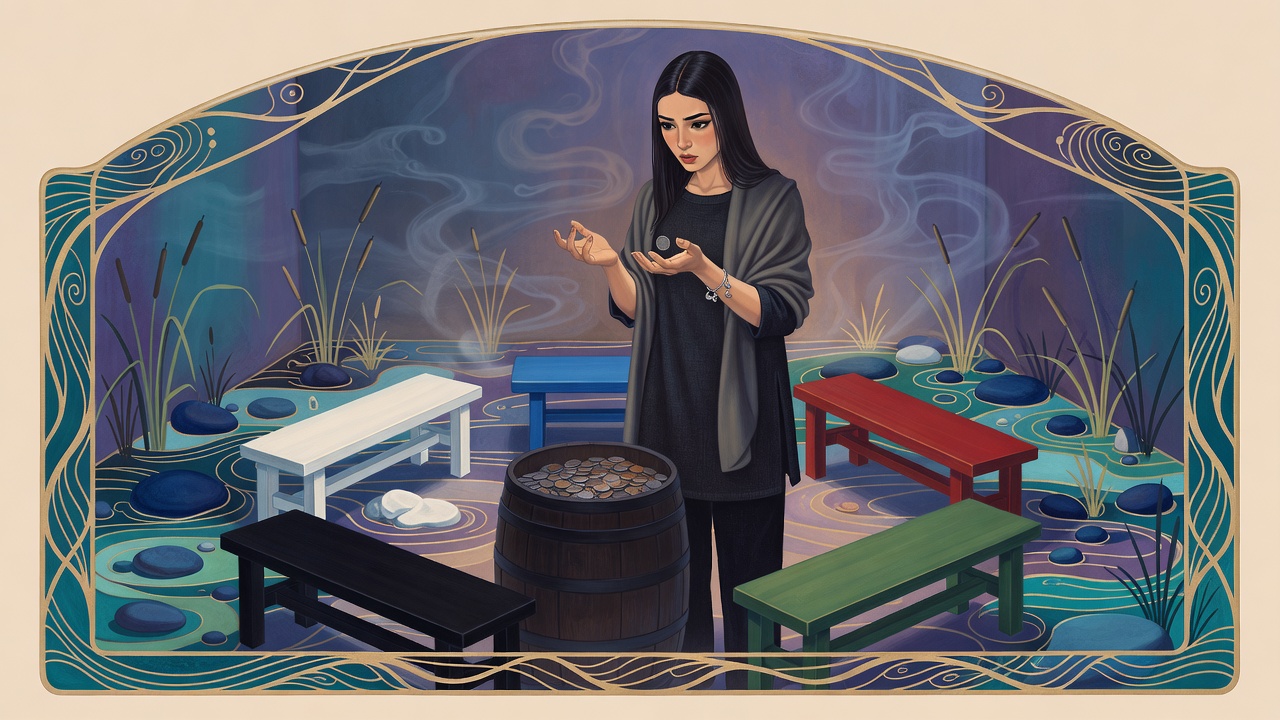
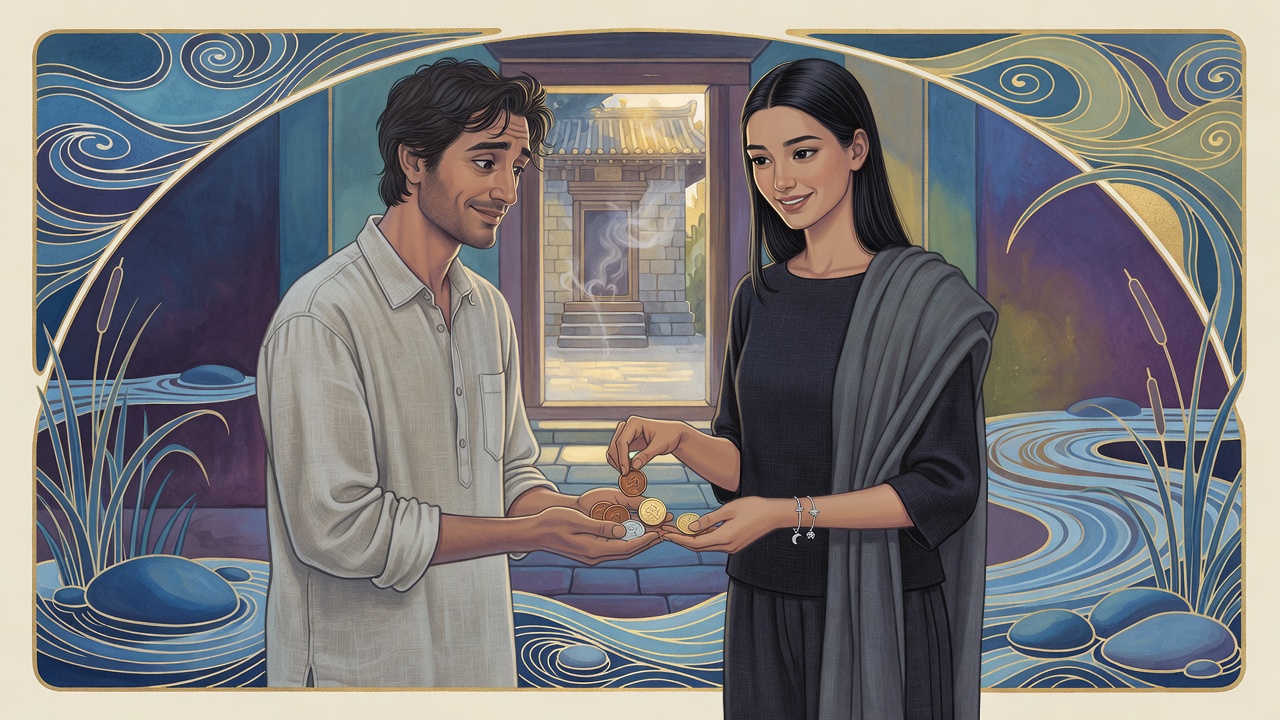
Most of the villagers drift away, three women who loved Navarr weep by the fire, and a thin rain begins. In the cramped house — a tiny kierten, the room every Welce home keeps empty inside its front door, then a cluttered main room — Doman chooses his keepsake: the three random blessings Navarr hung over his bed, courage in hammered copper, endurance in blue embroidery, triumph on painted canvas. Zoe shakes the silver bracelet on her left wrist, which carries her own birth blessings of beauty, love and power; privately she has always thought that none of them suits her. On her mat behind a purple curtain she remembers the family story of the dawn she was born: Navarr in the streets of Chialto begging a coin from a tavern drunk (beauty), another from a plain servant (love), and the third from a young prostitute who went with him into a temple and plunged her hands beside his into the coin barrel (power). For himself he drew change.
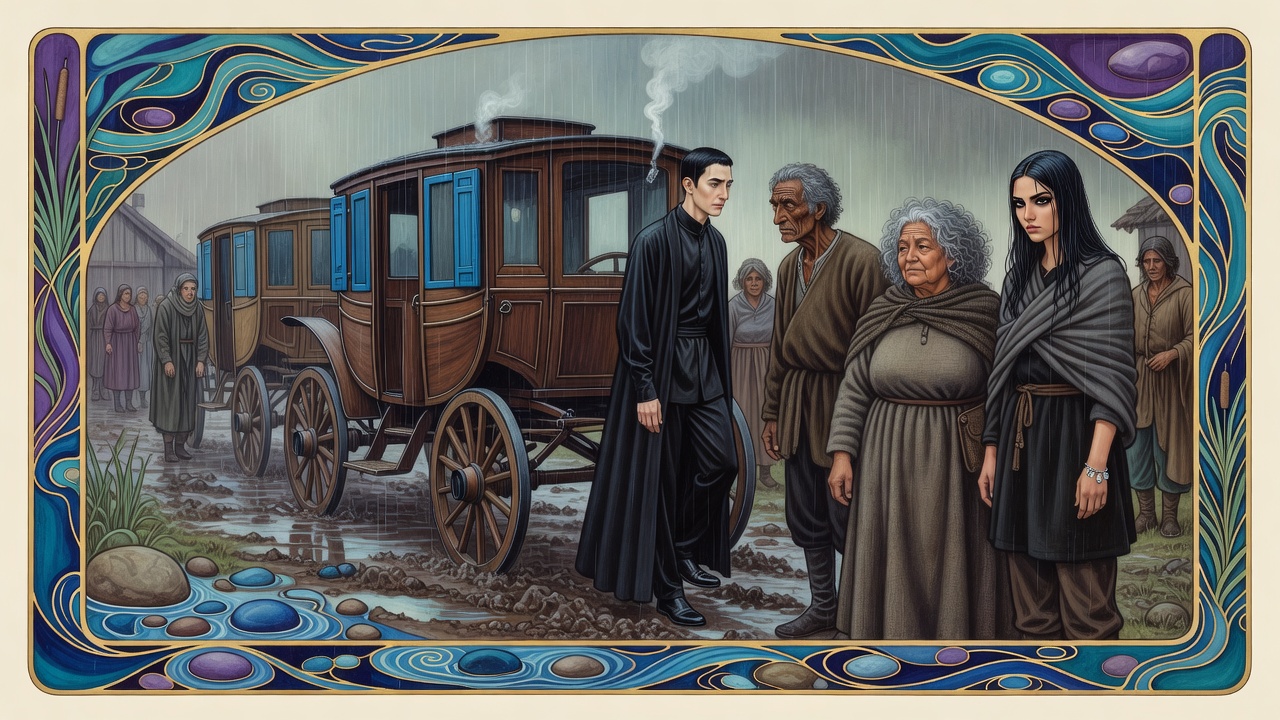
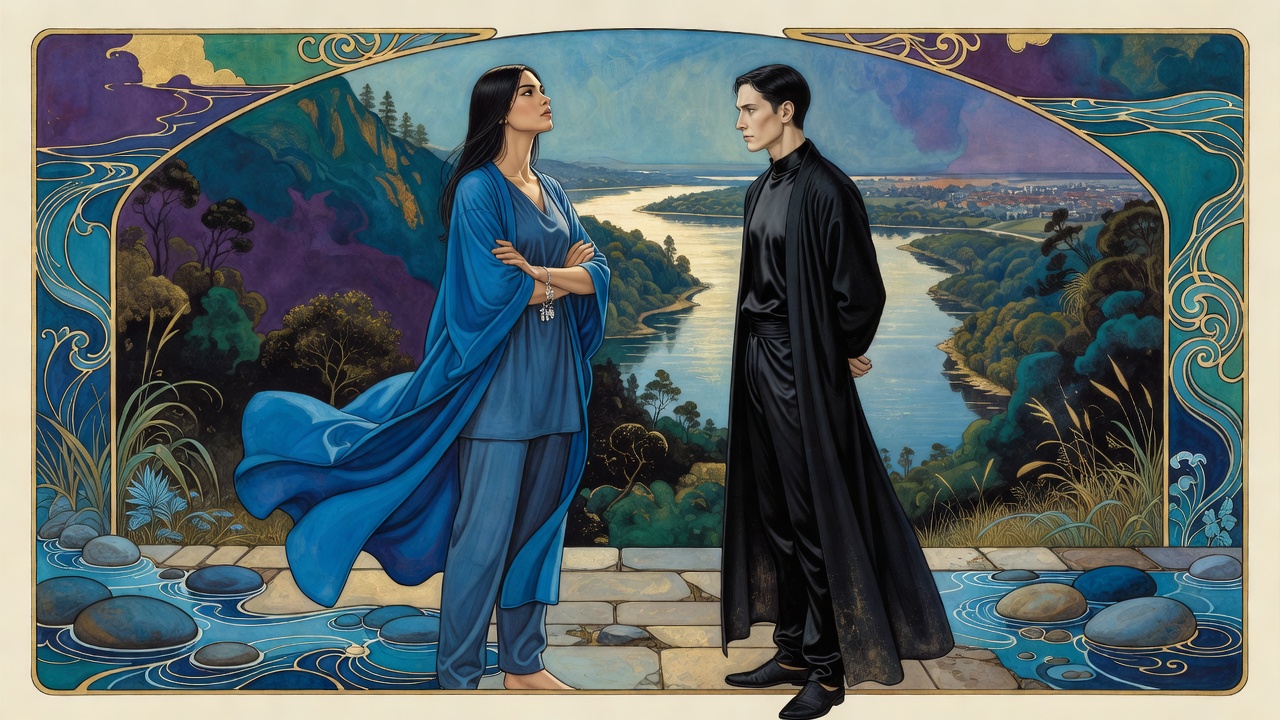
She wakes to the rain she has always loved and scrubs the house. Doman’s wife Miela, who raised ten children, takes her in, spends two days clearing out Navarr’s things and floats the names of possible husbands. Then a horseless six-wheeled vehicle grinds into the village through the drizzle, trailing white smoke, and the villagers gather in a ragged circle to stare. A man in black steps down into the mud, picks out Doman as the spokesman and asks for Zoe Ardelay. He is Darien Serlast, the king’s closest adviser, and he has come to take her to Chialto “so she can marry the king.” She is to be King Vernon’s fifth wife.
The Road and the Vanishing
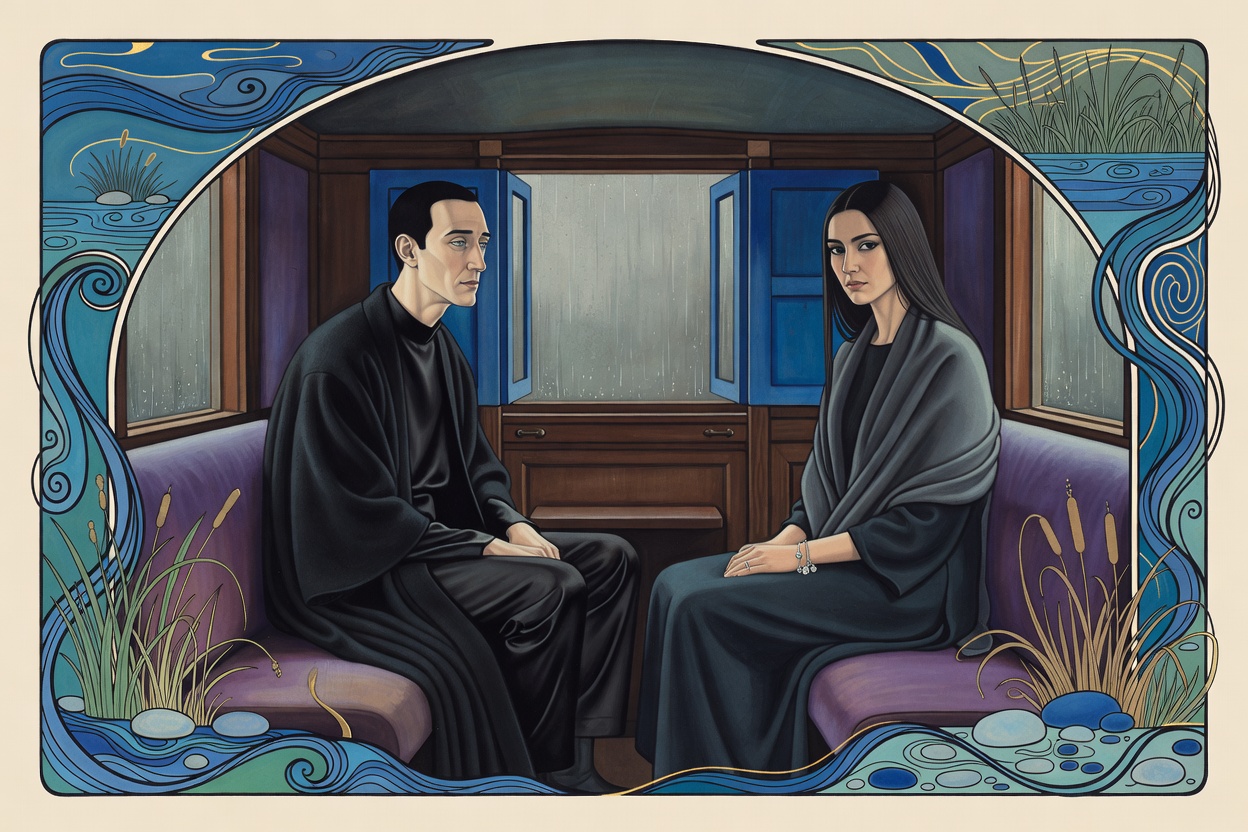
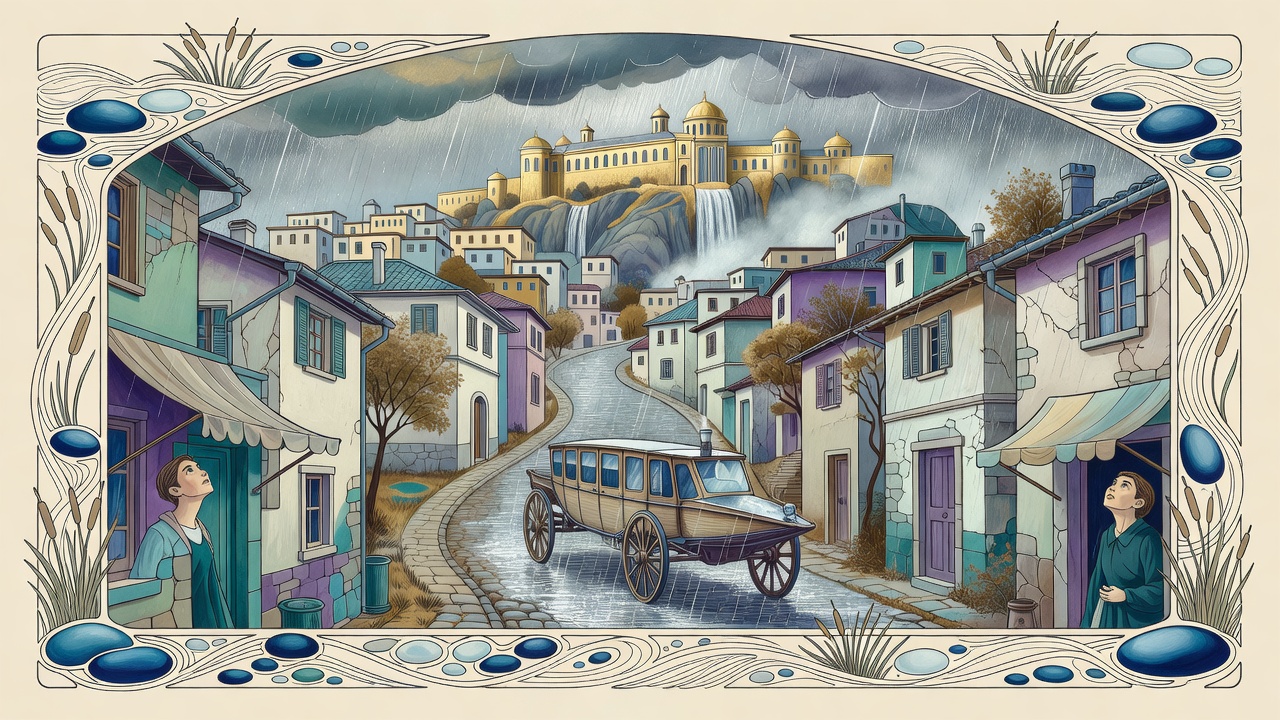
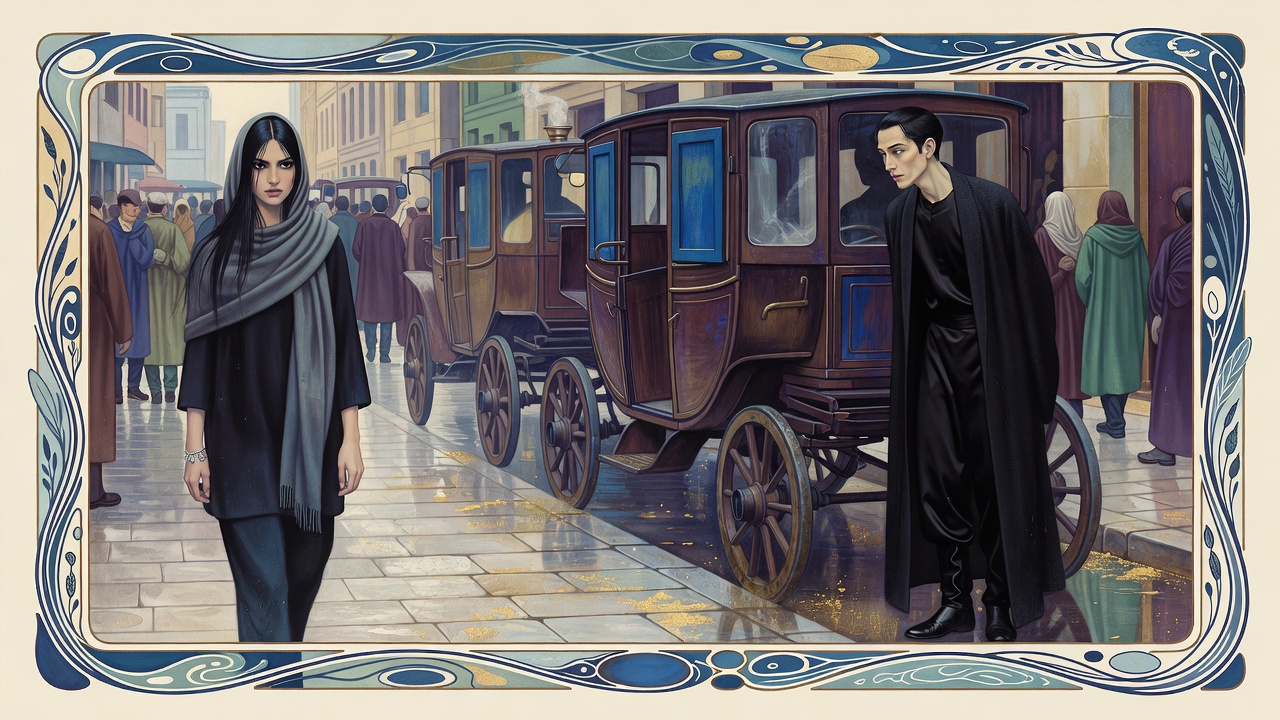
Numb with grief, Zoe goes. The vehicle is an elaymotive, one of the gas-powered cars the Dochenza family invented, and it carries her toward a capital she has not seen since she was thirteen. Early on Darien probes her: the daughter of a sweela man, he says, cannot be as tame as she seems. She tells him she is a woman of water, and the book takes her at her word. By the time they reach the capital she is already slipping around the obstacles in her path, Darien included. Chialto, the city on the Marisi River, is parched by drought when they arrive, and the sky opens over it in a sudden deluge — the first hint of what Zoe carries.
Then, at an unexpected stop, with the door open and Darien’s attention elsewhere, she gets out and walks into the crowd. That is the entire escape. She does not trust Darien, who plainly knows more than he lets on, and she has gold sewn into her shawl. It is the book’s temperament in one gesture: the heroine’s first act of will is not a fight but a departure.
The River Flats
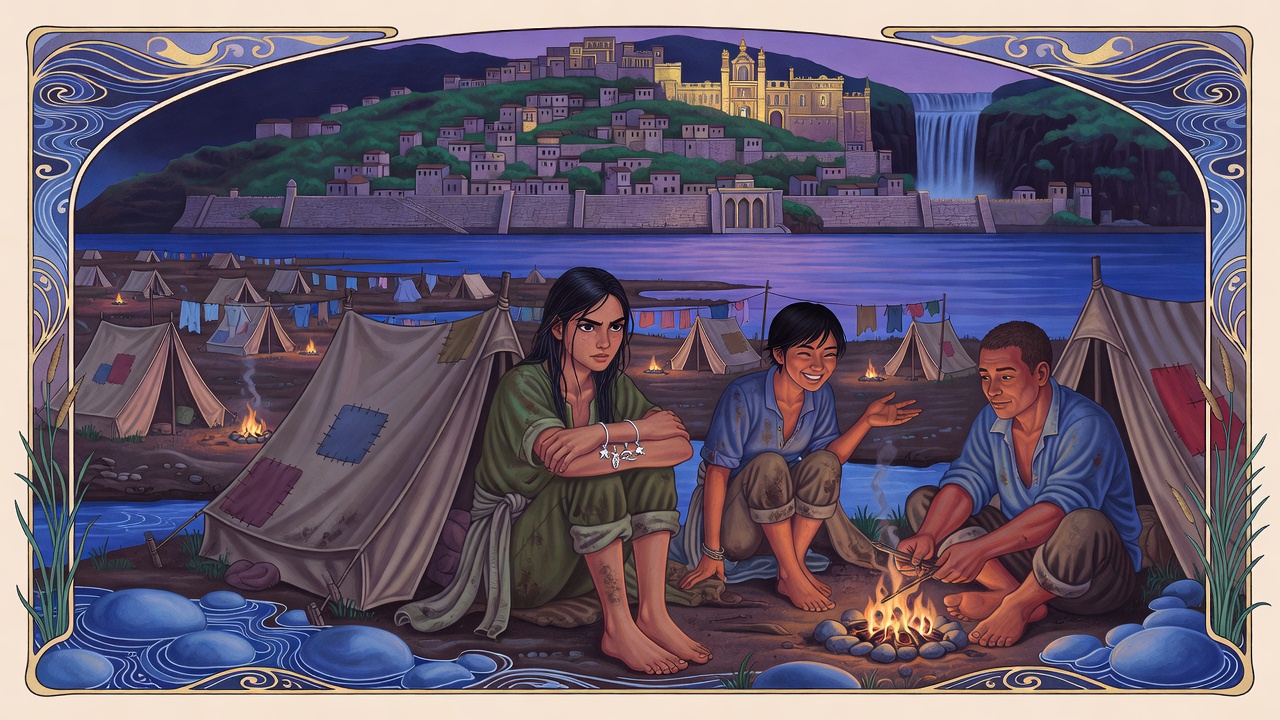
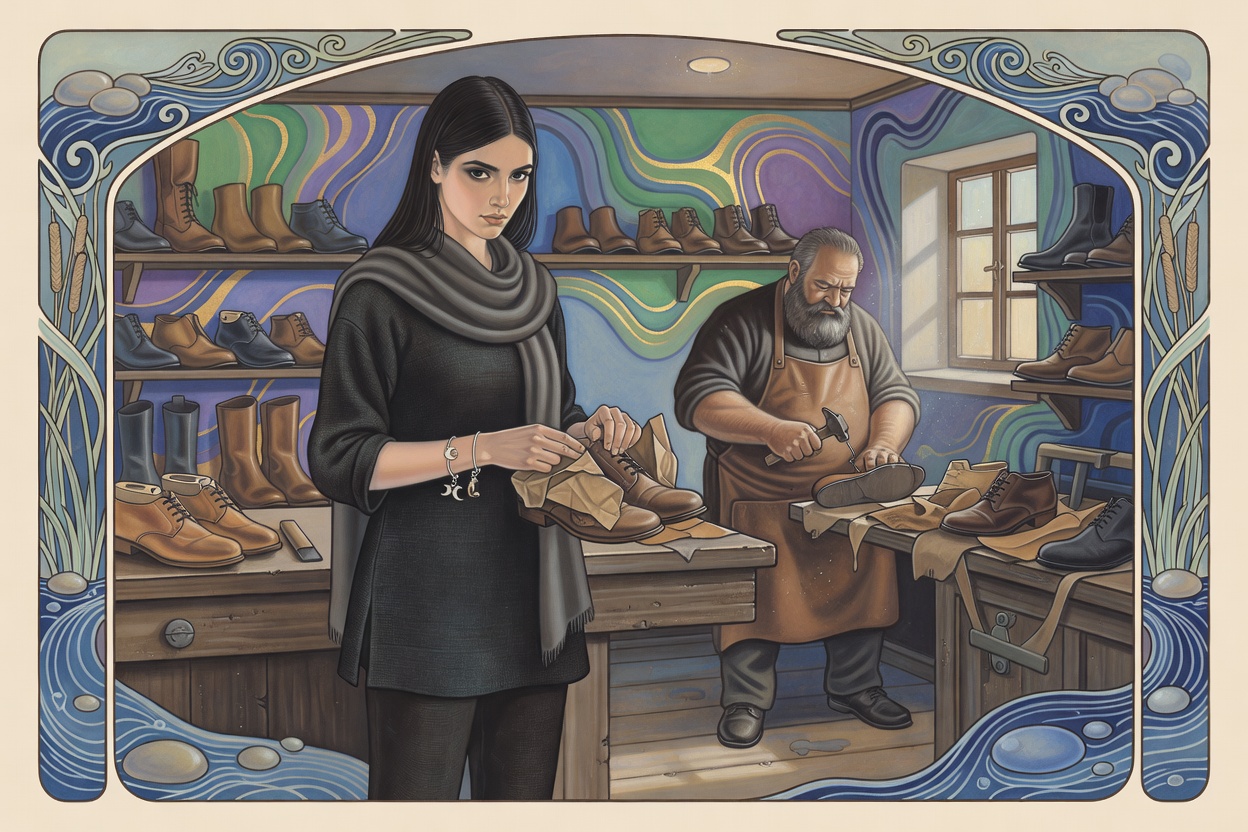
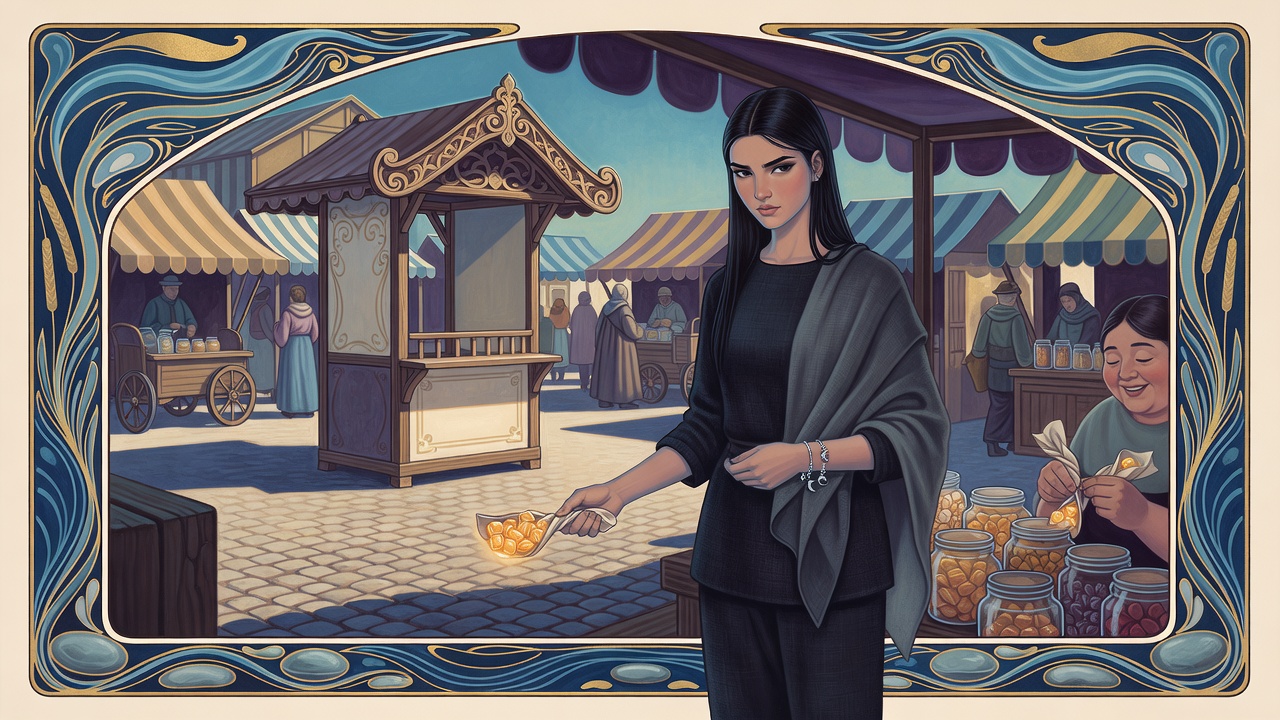
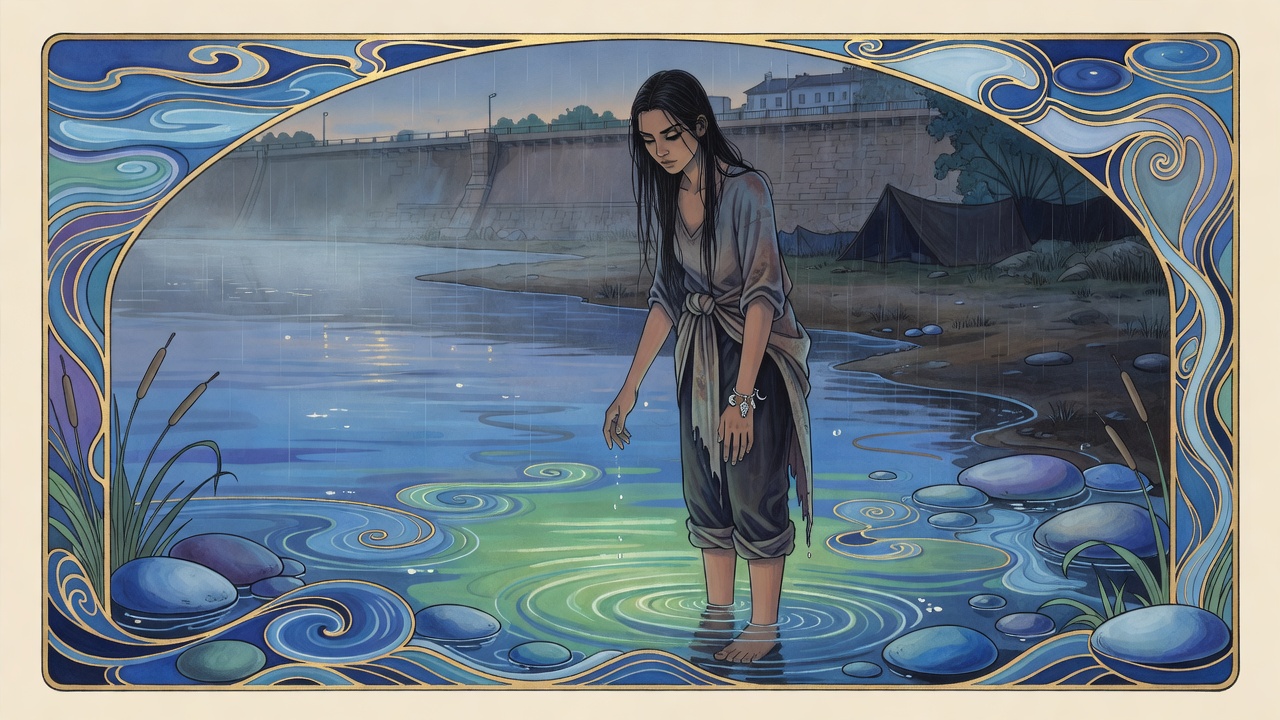
She goes to ground on the river flats, the tent camp on the Marisi’s banks where the city’s poor sleep. There she befriends Annova and Calvin, a coru couple who live on the river, and for a run of chapters each one ends the same way: Zoe declares herself a coru woman, and Annova replies that she has a sweela heart. Her money is stolen and promptly recovered. A cobbler and his wife hire her to keep their shop, and she spends her wages on food, clothes and little candies. Slowly, by the river, she comes back to life. Readers either treasure this long, low-stakes stretch or wish it shorter; it is the book doing what its heroine does, drifting until the current turns.
Shinn uses it to build her city. Zoe walks it: the two great plazas, the Plaza of Men and the Plaza of Women; the promise booth, where anyone can swear an oath before witnesses; the blind seers, who know everything and sell it for gold or for information. At a temple she draws a random blessing and gets change, the coru blessing her father drew for himself on the morning she was born. And at some point a new father begs her to help him draw blessings for his newborn twin girls — the scene Shinn has called her favourite in the book, while admitting it does nothing to advance the plot.
Meanwhile the water has noticed her. It comes when she calls; rain gathers where she walks and trails after her; the river calms at her will. Then it comes out that her grandmother Christara, the coru Prime, is dead, and that the power and the headship of the Lalindar family have passed to Zoe. The village exile is one of the five Primes of Welce.
The Lalindar Prime
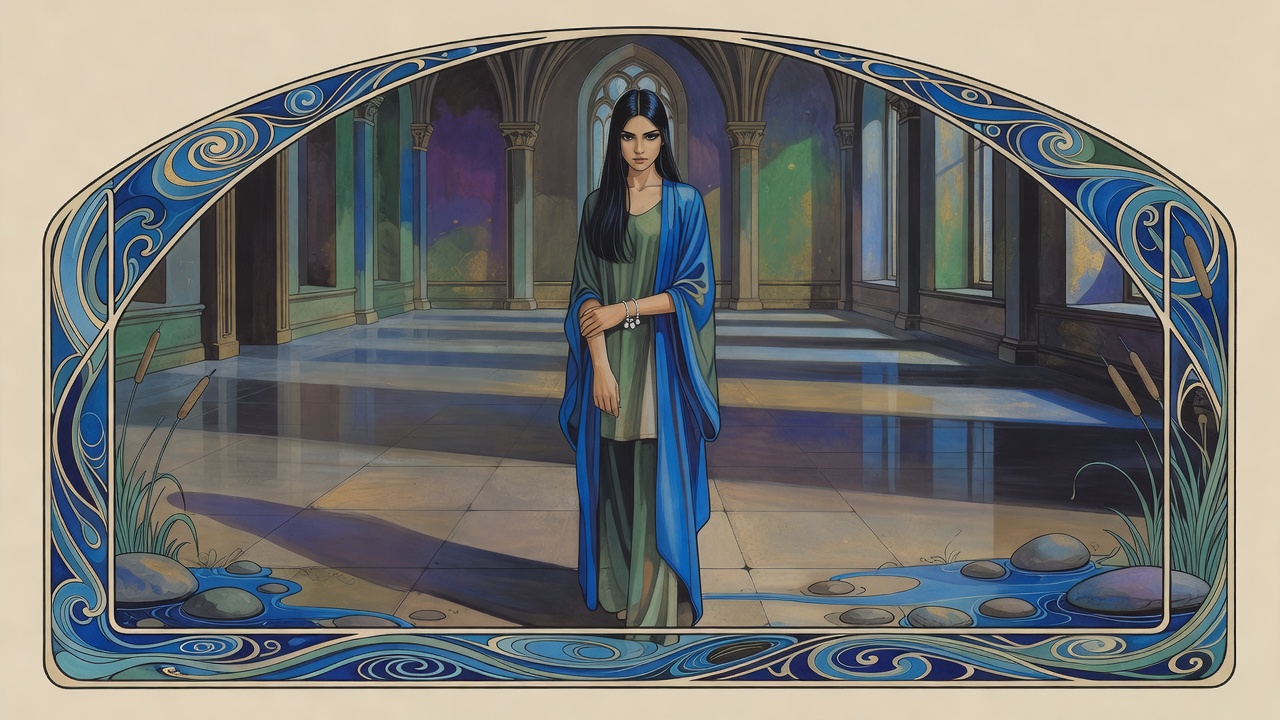
The woman Darien came to collect as a bride is now Zoe Ardelay Lalindar, coru Prime, head of one of the Five Families and wealthy in her own right. She moves into her grandmother’s house, perched halfway up the mountain on the other side of the Marisi, and Annova and Calvin follow her into her new life, as her friends and her servants both. Darien, who does not give up, tracks her down. Her new rank frees her from the king’s marriage. It does not free her from Darien.
What she learns now about her father is harder. Navarr was exiled by the king at Christara’s urging, and Navarr in turn kept Zoe from her mother’s family and from her destiny as the next Lalindar Prime, letting her believe the Lalindars wanted nothing to do with her. Her mother had died before the exile. Both her grandmother and her father knew what power Zoe might have. The man she mourned at the pyre was brilliant and faithless, and the book is only beginning to take him apart.
The Court of Four Queens
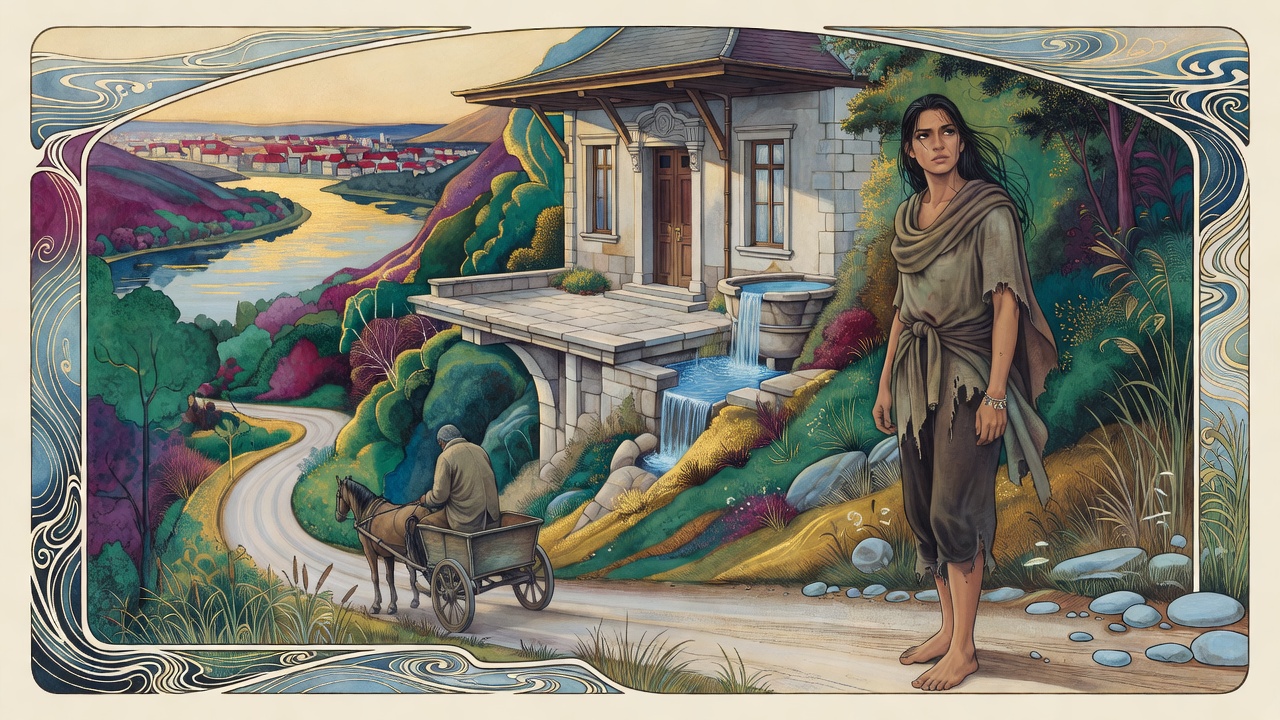
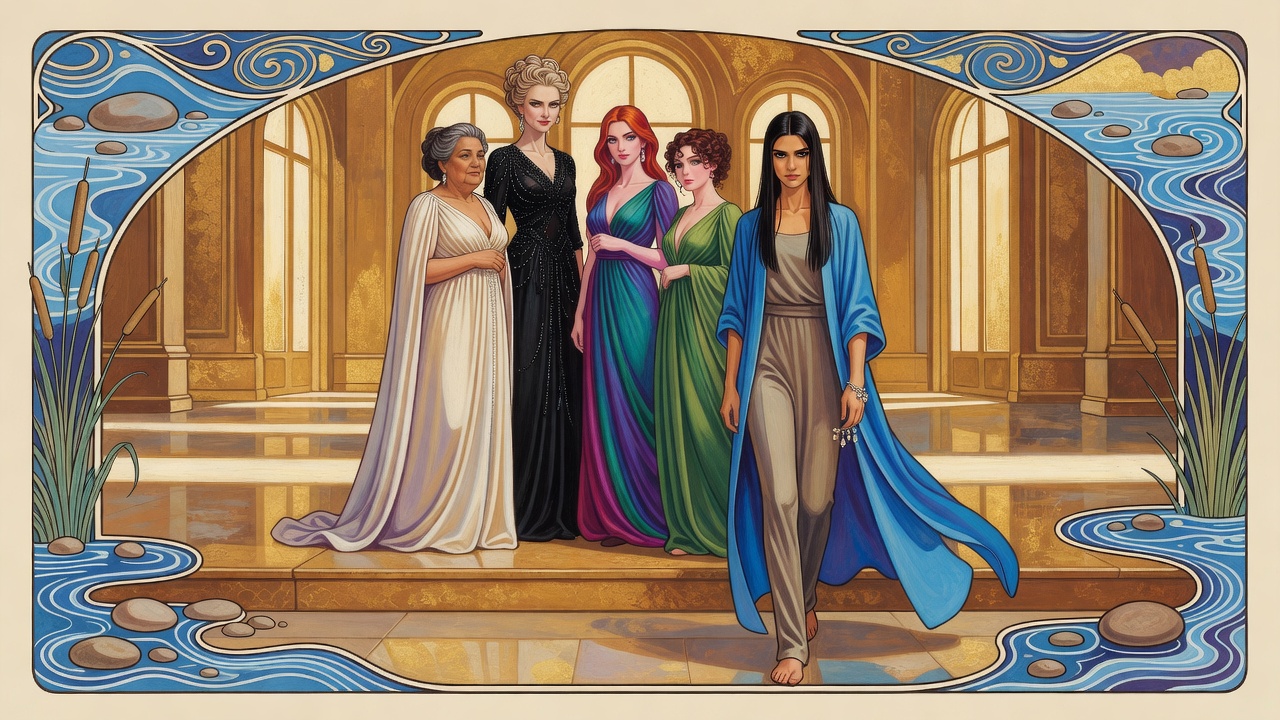
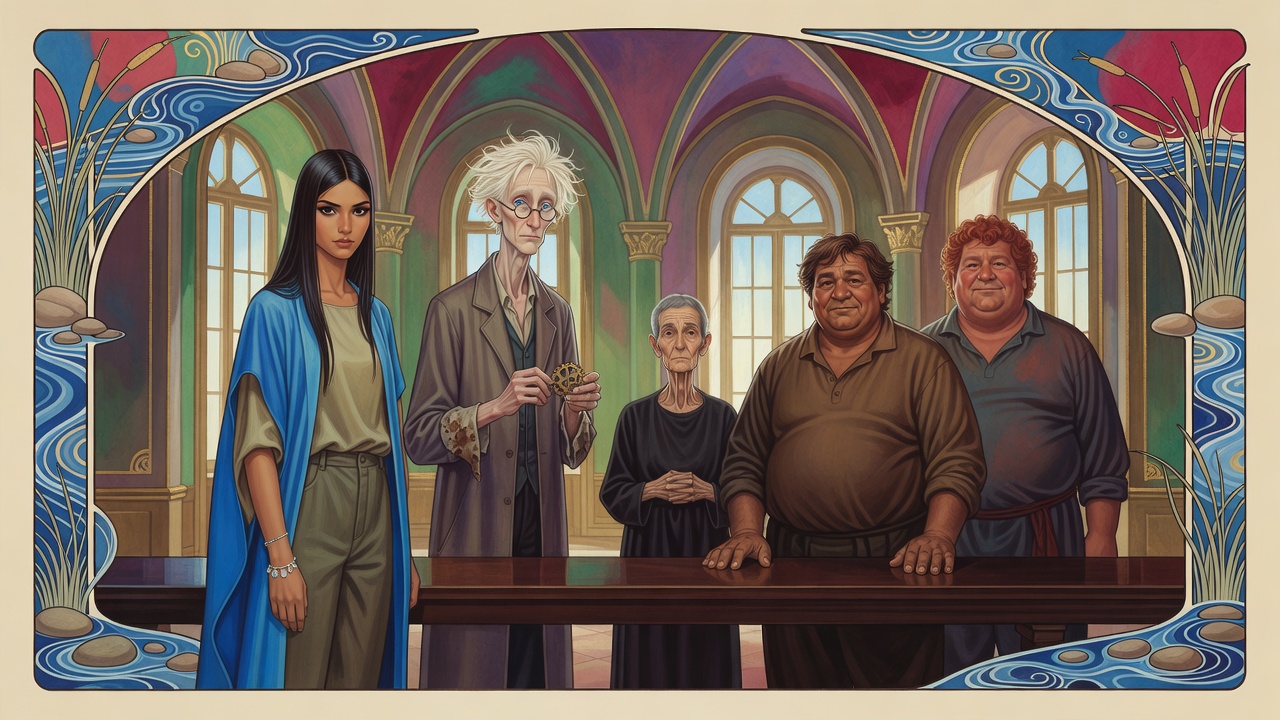
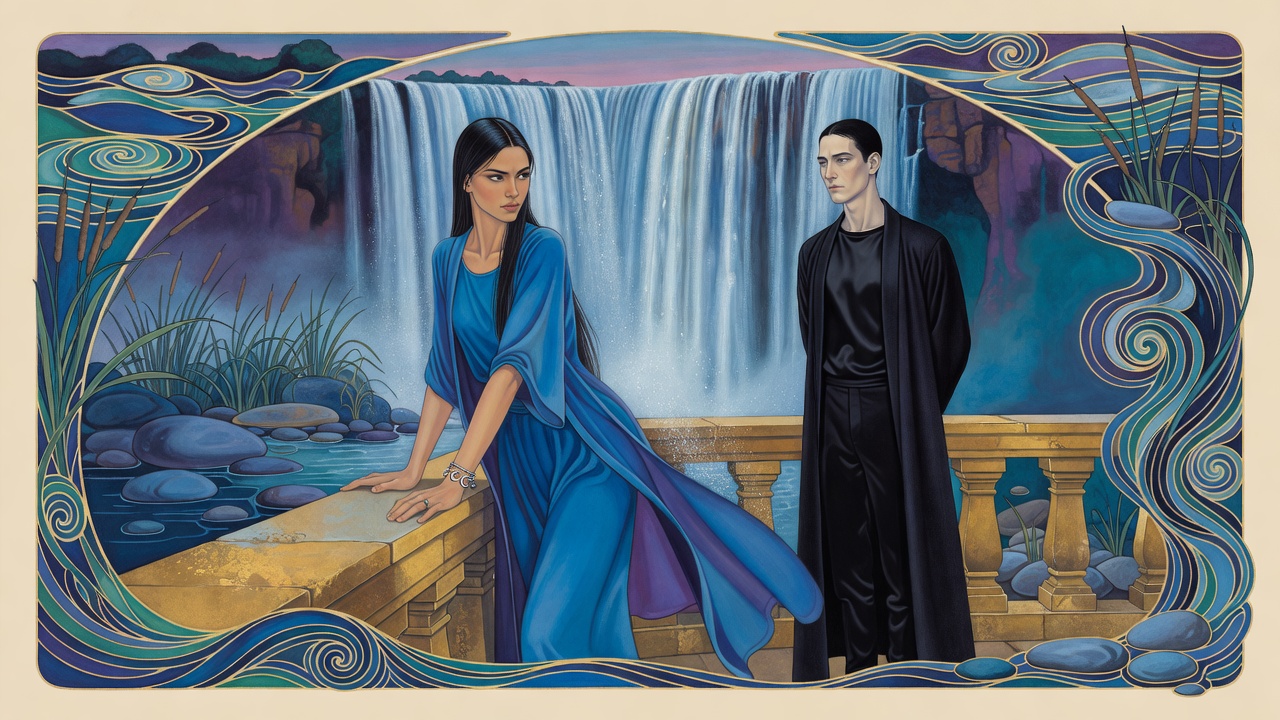
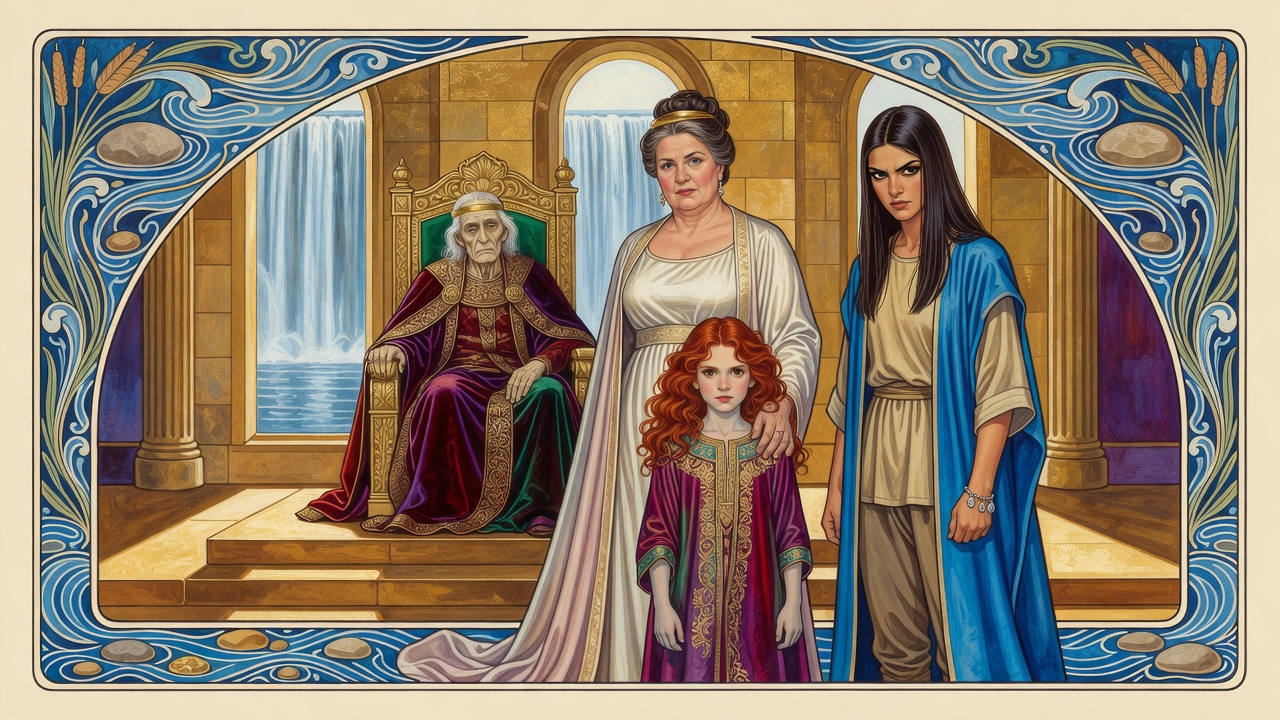
Zoe enters the palace beside the waterfalls as a Prime, not a bride, and with a Prime’s wardrobe; a good deal of the book’s middle is tunics, shoes and over-robes, which readers either relish or skim. Booklist likened the court to the courts of sixteenth- to eighteenth-century Europe, and it is the political engine of the whole series. King Vernon has four wives, and the court runs on their rivalry over who will be heir: Elidon, the first and, a seer says, the most beloved; Seterre, hunti, Josetta’s mother; Alys, sweela, the third wife and Corene’s mother; and Romelle, torz, Natalie’s mother. Alys still regards Darien as hers and turns on the newcomer, to the point of shredding Zoe’s clothes. Of the princesses, Josetta, the eldest, has been raised as heir and is anxious and timid; Corene is a red-haired, fierce-willed twelve-year-old. Zoe meets her fellow Primes too: Kayle Dochenza (elay), head of the family that invented the elaymotives; Mirti Serlast (hunti), Darien’s aunt; Taro Frothen (torz); and her uncle Nelson Ardelay (sweela), with his son Kurtis.
Darien parcels out his secrets one at a time, and he and Zoe spar over every one. She names the trouble herself:
“There is nothing but heartache for a coru woman and a hunti man.”
He corrects her at once: the hunti man never fails her, the coru woman always moves him, and each is the other’s strength and lift, which is as close as this book comes to a thesis.
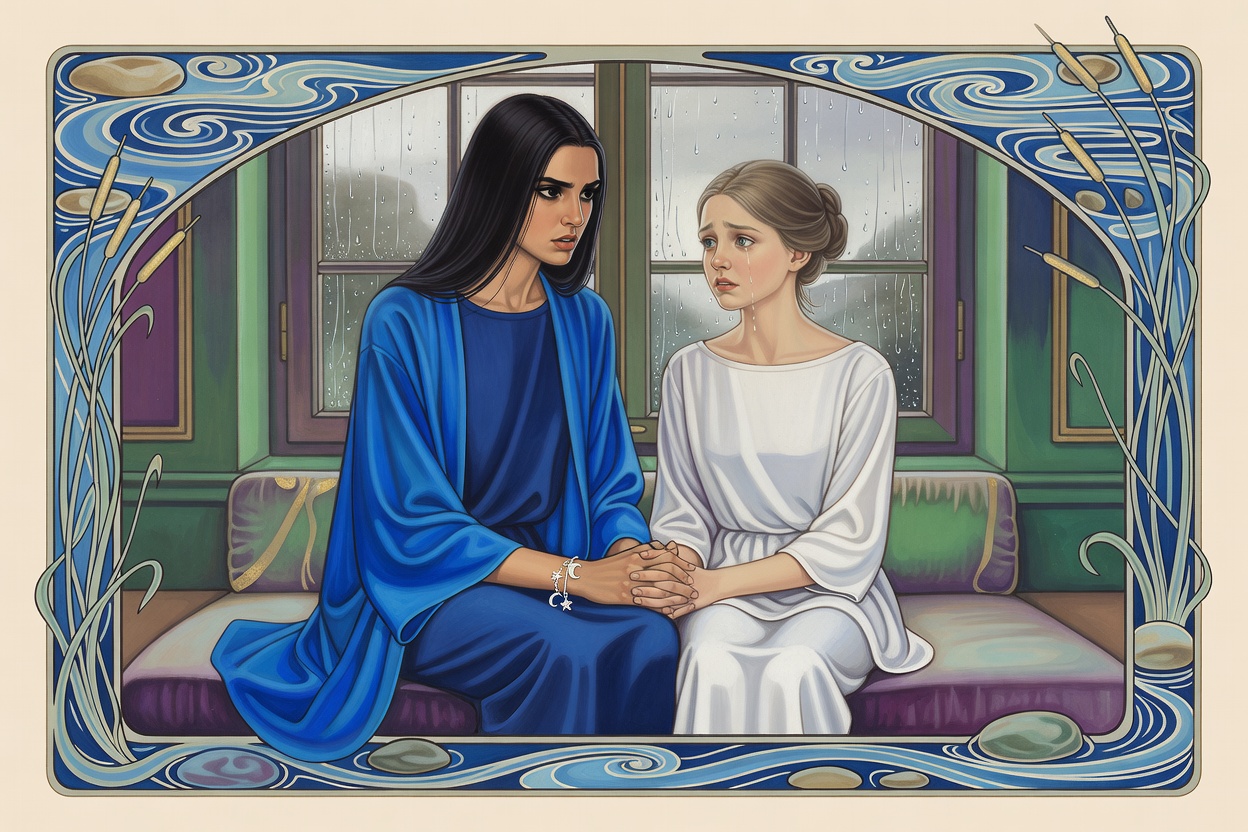
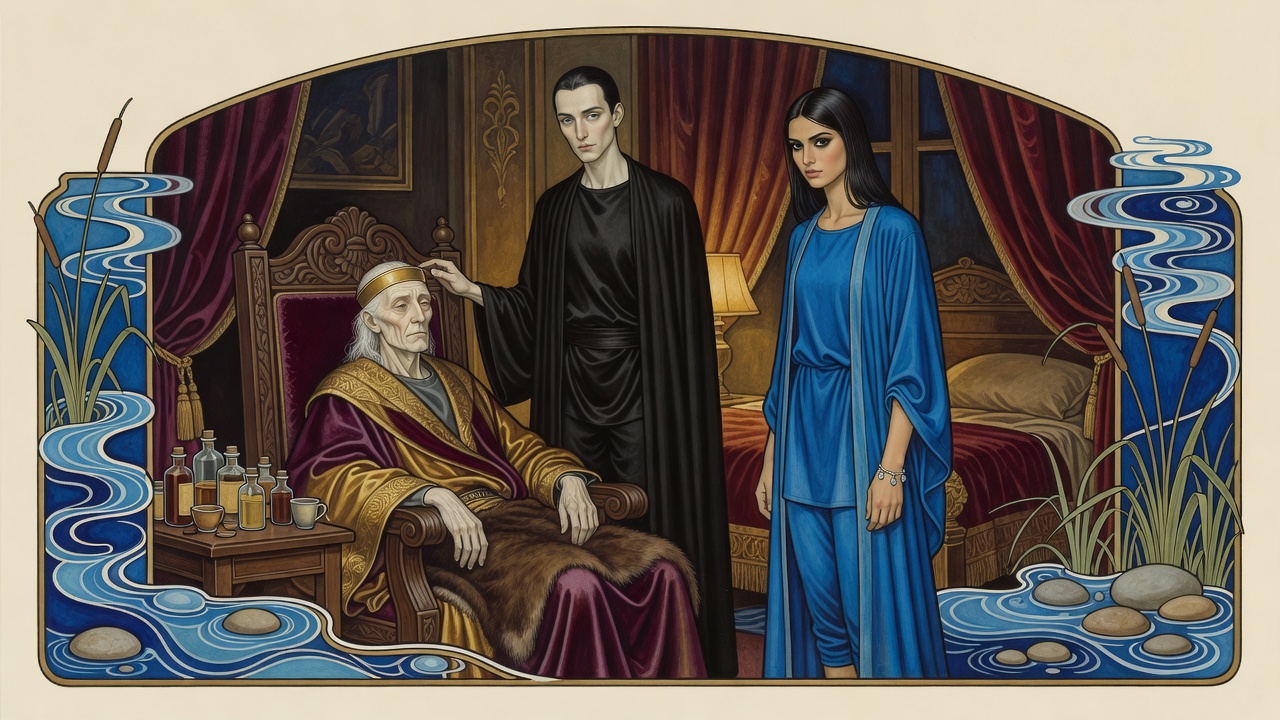
Then the secrets come faster. Someone is trying to kill Josetta and make it look like accidents. Zoe discovers that Josetta is her half-sister, fathered by Navarr with Queen Seterre. Shaken, she rushes out of the palace and has to decide what to do with a father she can no longer confront; the sisters bond, and Josetta begins to grow bolder. Queen Romelle turns out to be pregnant, a child that could put her in danger too, and Zoe comes to know who fathered it. Then the biggest secret of all: none of the three princesses is the king’s own. Vernon is nearly impotent, other men fathered them, and Darien, to please the king, is Corene’s father. Vernon is dying and fading, and the real power behind the throne is his adviser, the firm hand that keeps the old king steady. The trail of the attempts on Josetta leads to Wald Dochenza, Kayle’s nephew, long thought the likeliest candidate for Corene’s father, who hoped to put a daughter of his on the throne. Somewhere in all of this, Zoe and Darien share one small, awkward first kiss.
The Flood
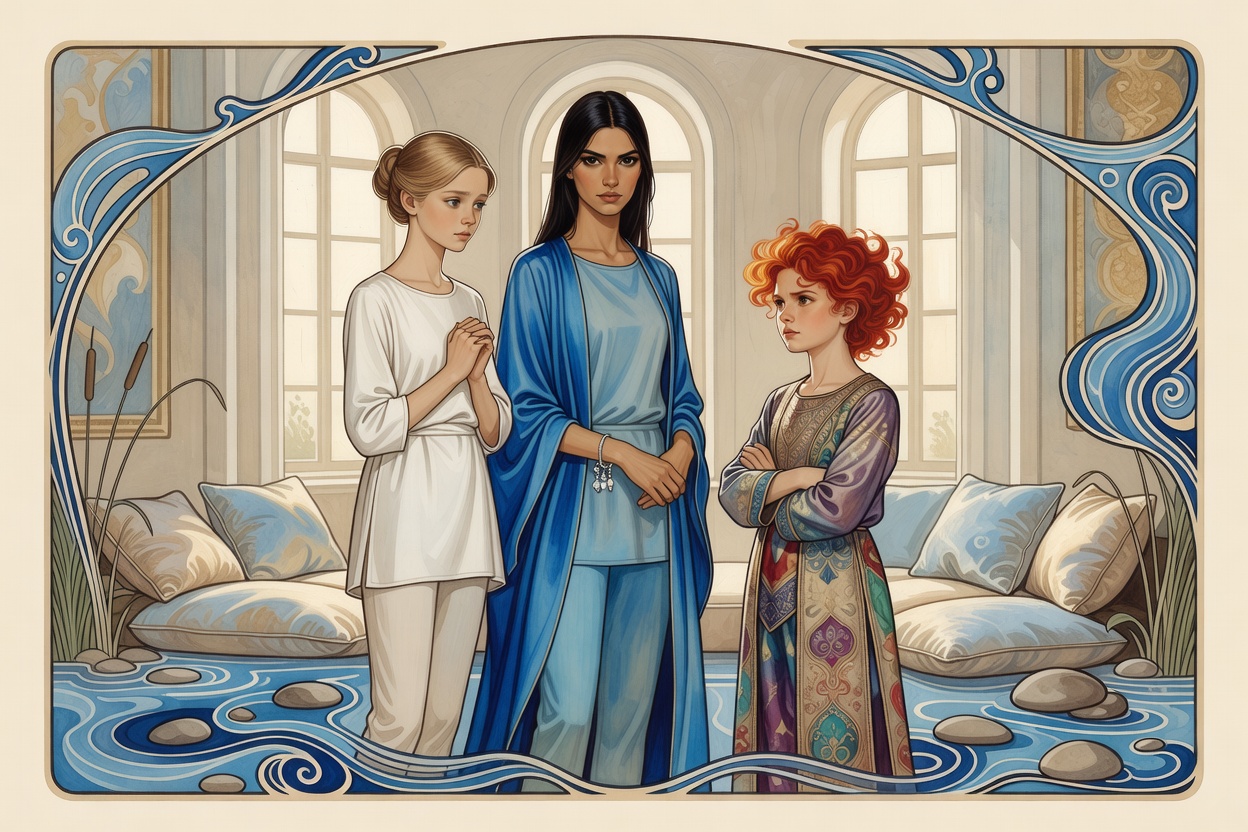
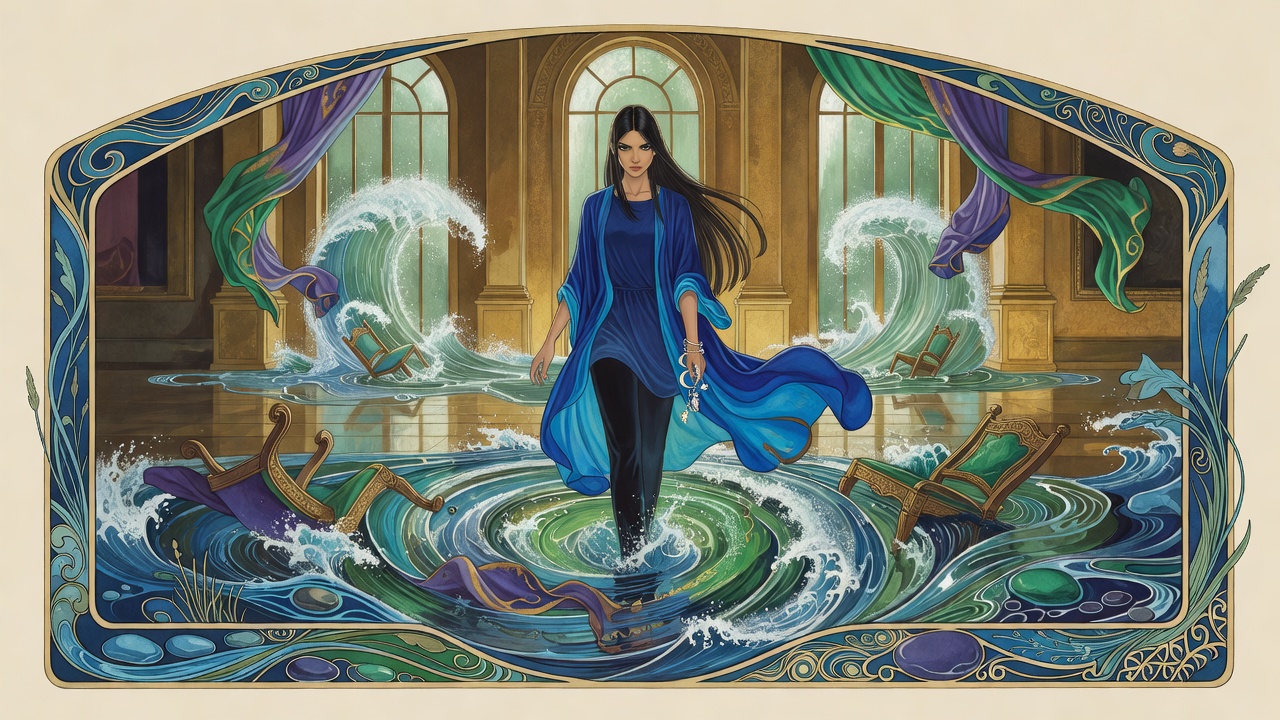
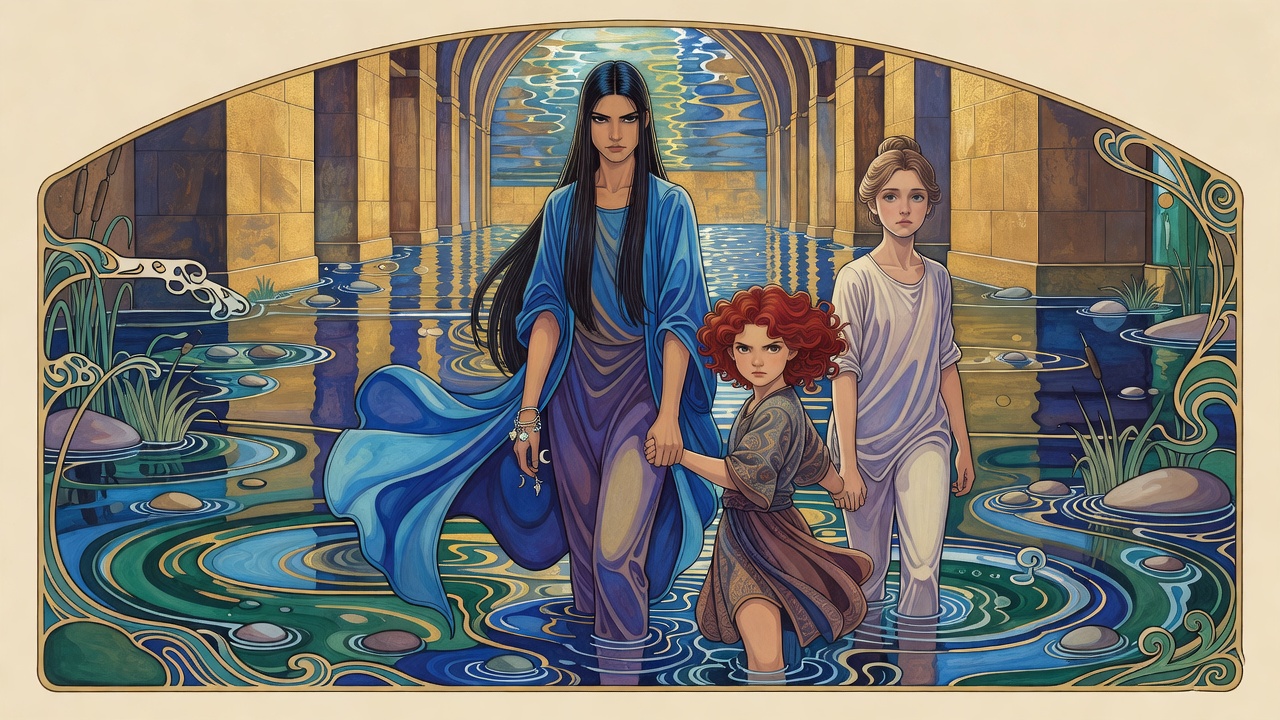
Then Vernon and Queen Elidon arrange to marry twelve-year-old Corene to the Viceroy of Soeche-Tas, the neighbouring country, and Zoe, who has spent the whole book flowing around obstacles, stops flowing. Coldly furious, she raises the Marisi and floods the palace to stop the wedding, and she takes the princesses with her. One reader calls it kidnapping and treason. It is also the moment the woman who would rather slip away than blaze up finds the one thing she will not slip away from.
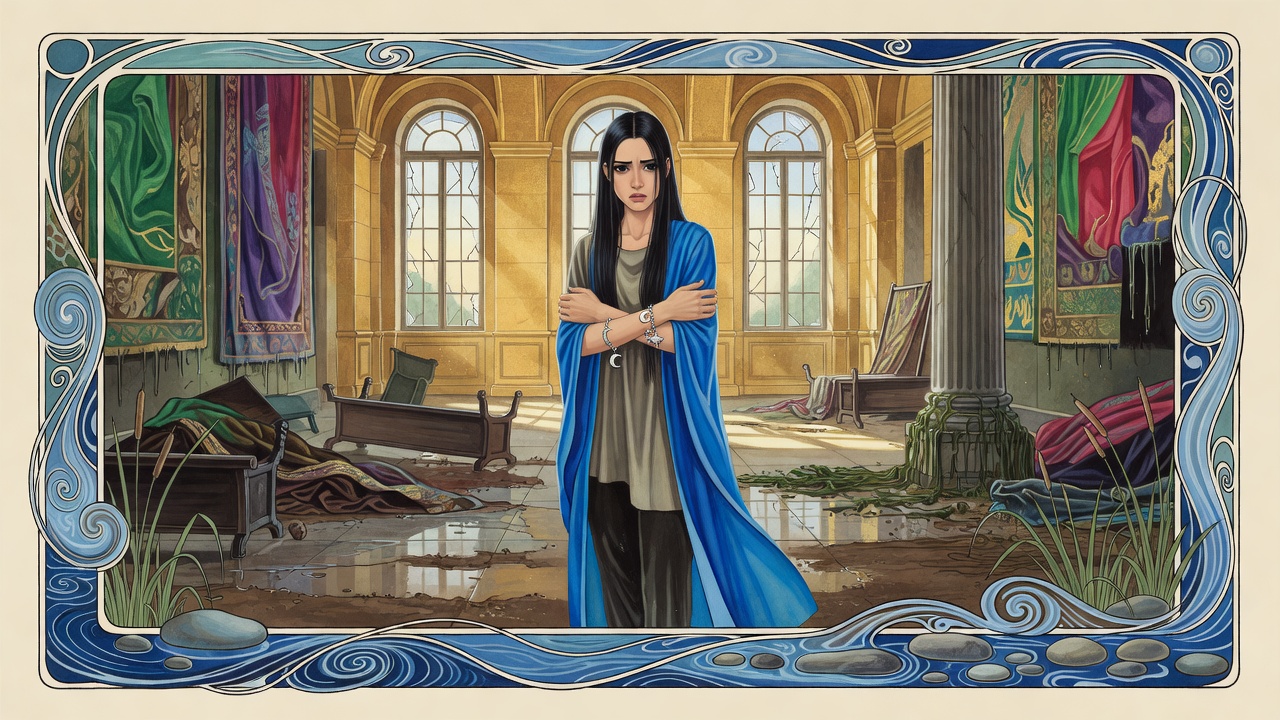
Much of the palace is wrecked. As readers tell it, she takes care that no one drowns — property damage, one shrugs, though another doubts that nobody died — and she helps, a little, with the aftermath. Then the court simply gives way: the betrothal is dropped, and her only penalty is a share of the bill, since the Lalindar estate must bear some of the cost of the damage. Readers still argue about how lightly she gets off. The series does not forget it; in Unquiet Land, years later, people still remember that Zoe Lalindar flooded the Marisi.
The Promise
Darien keeps the last of his secrets until the last couple of pages, and admits to having known far more, far earlier, than he ever said. Zoe learns that shortly after she vanished he went to the promise booth and recorded a vow, before witnesses, that he would find her and marry her, without troubling to ask her first. It is the most hunti proposal imaginable: decided, public and immovable. The confession and the real proposal come on almost the final page, and Zoe accepts. The household that will form around them takes in Josetta, Zoe’s sister, and Corene, Darien’s daughter. The book’s last words are a vow: “Word of a hunti man.”
Readers have called the ending rushed and too tidy, and it is quick. But it lays the foundation for everything after. When Royal Airs opens five years later, Zoe and Darien are married with a daughter, Vernon is dead, Darien is regent, and Josetta is running a shelter in the city’s slums.
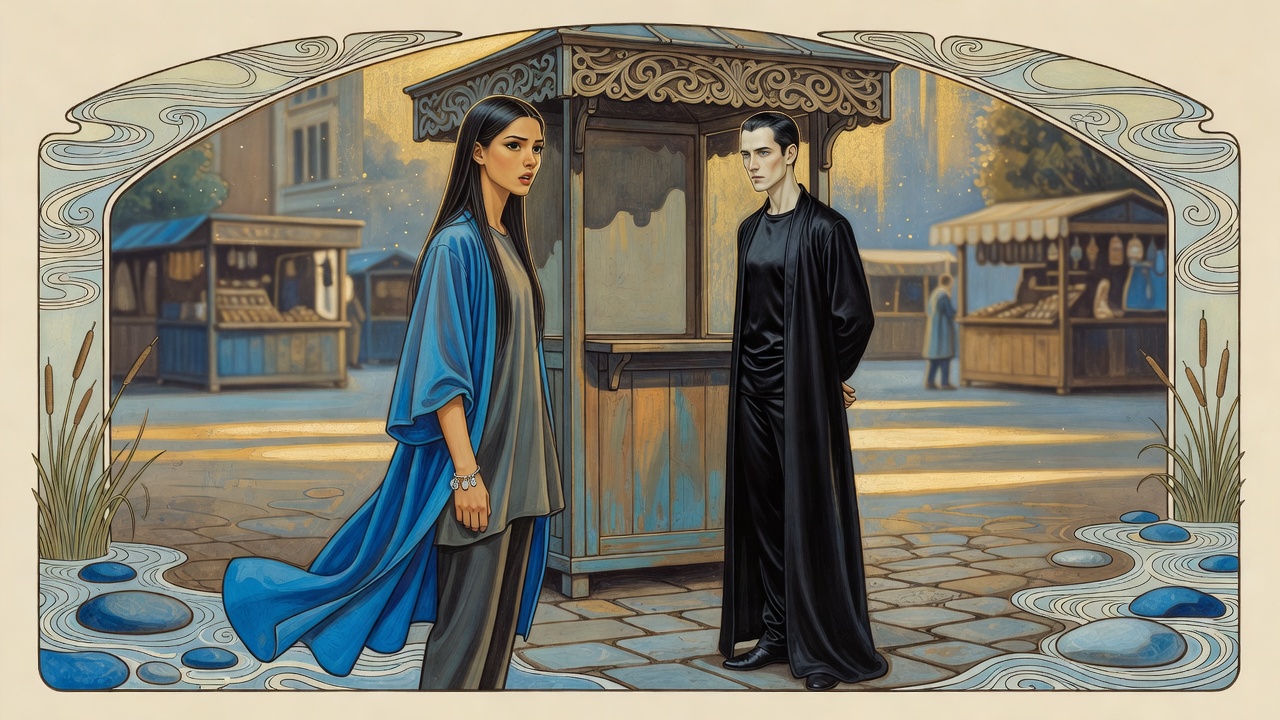
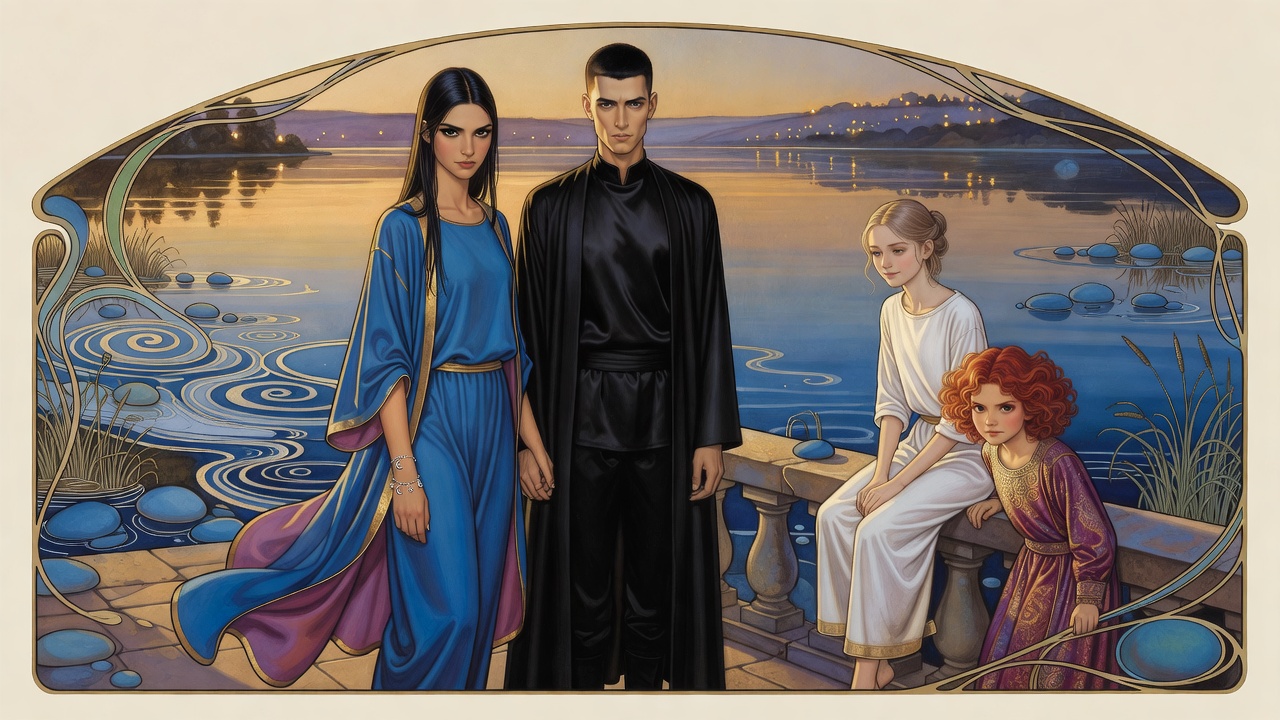
The elements in this book
- Zoe is coru, the element of water and blood, as her mother and all her mother’s family were; her father was sweela. She has always loved rain. Her birth blessings — beauty, love and power — fall, on Shinn’s own blessing sheet, under elay, sweela and hunti: not one of them is coru.
- Darien is hunti, wood and bone, like the Serlasts generally, a family of the unyielding. Navarr was sweela, fire and mind, and the book opens on his pyre. Annova’s running insistence that Zoe has a sweela heart is the book’s nod to a second element colouring a person.
- Blessings: a newborn is given three by strangers, as coins from a pocket or, in the traditional way, drawn from the heavy barrel at the centre of a temple. Random blessings are meant to be freely given, and people go on drawing them for guidance all their lives. Shinn’s sheet lists forty, eight to an element, plus three extraordinary ones: synthesis, triumph and time.
- The Five Families and their Primes in this book: Lalindar, coru (Christara, then Zoe); Dochenza, elay (Kayle); Serlast, hunti (Mirti); Ardelay, sweela (Nelson); Frothen, torz (Taro). Each Prime holds an extraordinary power over the element; most people in Welce have none.
- Zoe’s power here: rain that gathers and follows her, a river she can calm, or raise through a palace.
- The four queens: Seterre is hunti, Alys sweela and Romelle torz; Elidon, the first wife, is elay by fan reckoning (not confirmed in the text fetched). A coru woman is the element the court lacks, which is one way readers explain the summons of a fifth wife.
- The colours: this page’s blue and its water border follow the code a later book gives outright. In Whispering Wood blue is coru’s colour, with white for elay, red for sweela, green for torz and black for hunti.
Continuity notes
- Navarr Ardelay is dead on the first page (the book opens at his funeral). Christara Lalindar, the previous coru Prime, is dead too, and Zoe’s mother died before the exile.
- Zoe goes from village exile at twenty-three to coru Prime and head of the Lalindars, engaged to Darien at the end. In Royal Airs, five years on, they are married with a daughter.
- Darien Serlast, the king’s adviser, is revealed as Corene’s real father. By Royal Airs Vernon is dead and Darien is regent.
- Josetta, fourteen going on fifteen, is revealed as Navarr’s daughter by Queen Seterre, Zoe’s half-sister, and survives the attempts on her life, which trace to Kayle’s nephew Wald Dochenza. She leads Royal Airs.
- Corene is twelve; her betrothal to the Viceroy of Soeche-Tas is dropped. She leads Jeweled Fire.
- Queen Romelle is found to be pregnant during the court chapters; in Royal Airs her younger daughter Odelia, listed there as the king’s own child, is four.
- King Vernon is dying and fading, with Darien the force behind the throne; he is dead before Royal Airs opens.
- The palace is flooded and badly damaged; Unquiet Land still remembers the flood.
- Annova and Calvin recur; in Unquiet Land Annova helps Leah Frothen open her shop. Kayle’s elaymotives grow into the aeromotives of Royal Airs.